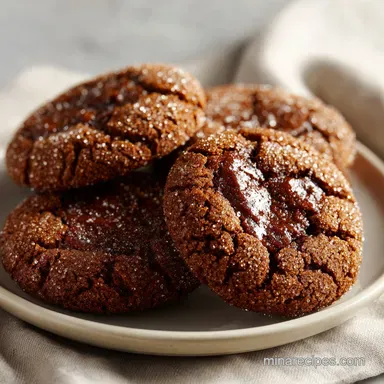
Soft Chewy Molasses Cookies: Rustic and Spiced

- Time: 15 min active + 12 min bake (optional 30 min chill) = Total 62 mins
- Flavor/Texture Hook: Deep, spiced warmth with a velvety center and a slight sugar shatter on top
- Perfect for: Cozy rainy afternoons, holiday gift platters, or a quick craving fix
- Soft Chewy Molasses Cookies
- Secret Texture Tips
- Component Analysis
- Essential Pantry Items
- Tool Kit Checklist
- Making The Cookies
- Fixes For Common Issues
- Troubleshooting Common Issues
- Flavor Twist Ideas
- Adjusting the Batch Size
- Common Baking Myths
- Freshness and Storage
- Plating and Pairing
- Recipe FAQs
- 📝 Recipe Card
Soft Chewy Molasses Cookies
That first hit of ginger and cinnamon hitting the hot oven air is basically a hug for your house. I remember the first time I tried making these for a family get together, and I accidentally used a molasses that was way too bitter. The cookies looked right, but they tasted like a campfire gone wrong.
It was a lesson in reading labels, and honestly, a bit of a disaster that we all laughed about while eating store-bought treats instead.
But once I swapped to the unsulphured version, everything changed. There's something about the way the coconut sugar melts into the butter that creates this deep, rustic sweetness.
These soft chewy molasses cookies aren't about looking like they came from a professional bakery, they're about that comforting, slightly imperfect shape and a center that stays soft for days.
You can expect a cookie that has a bit of a chew, a lot of warmth, and a crystalized sugar crust that gives a tiny bit of resistance before you hit the velvety middle. We're going for a cozy, home style vibe here, so don't stress if your circles aren't perfectly round.
Secret Texture Tips
The Acid Base Reaction: Molasses is naturally acidic, which reacts with the baking soda to create tiny carbon dioxide bubbles. This is what gives the cookies their lift and keeps the crumb from becoming a dense brick.
Sugar Crystallization: Rolling the dough in granulated sugar just before baking creates a thin, crisp shell. This contrast makes the interior feel even softer and more velvety by comparison.
Butter State: Using softened butter rather than melted butter ensures we trap air during the creaming process. This prevents the cookies from puddling into flat pancakes on the sheet.
Moisture Balance: The combination of coconut sugar and molasses provides a higher moisture content than white sugar alone. According to King Arthur Baking, the hygroscopic nature of these sugars helps the cookie retain water, preventing them from drying out.
| Method | Time | Texture | Best For |
|---|---|---|---|
| Fast Bake | 12 mins | Chewier, thinner | Quick cravings |
| Chilled | 12 mins + 30m chill | Thicker, softer | Dessert platters |
| Low Temp | 15 mins (325°F) | Uniform, pale | Softest bite |
Component Analysis
| Ingredient | Science Role | Pro Secret |
|---|---|---|
| Unsulphured Molasses | Moisture & Acid | Use "light" for a milder, "dark" for a bolder taste |
| Baking Soda | Leavening Agent | Ensure it's fresh or the cookies won't rise |
| Coconut Sugar | Flavor & Color | Adds a caramel note that white sugar lacks |
| Ground Ginger | Flavor Profile | Sift it if you see clumps to avoid "spice pockets" |
Essential Pantry Items
For the base of these soft chewy molasses cookies, you'll need these exact amounts. I've found that using a digital scale is the way to go, but cups work too if you're not in the mood for precision.
- 1/2 cup (115g) unsalted butter, softened Why this? Provides the fat needed for a velvety crumb
- 3/4 cup (150g) coconut sugar Why this? Deep caramel flavor and softer texture
- 1 large egg, room temperature Why this? Binds everything and adds structure
- 1/3 cup (80ml) unsulphured molasses Why this? Essential for the signature chew and spice
- 2 1/4 cups (280g) all purpose flour Why this? Standard protein for a reliable hold
- 2 tsp (10g) ground ginger Why this? Gives that classic spicy kick
- 1 tsp (5g) ground cinnamon Why this? Rounds out the ginger with warmth
- 1 tsp (5g) baking soda Why this? Reacts with molasses for lift
- 1/4 tsp (1.5g) salt Why this? Balances the deep sweetness
- 2 tbsp (25g) granulated sugar Why this? For the exterior sugar crust
| Original Ingredient | Substitute | Why It Works |
|---|---|---|
| Coconut Sugar | Brown Sugar | Similar moisture. Note: Less caramel depth than coconut sugar |
| Unsulphured Molasses | Dark Corn Syrup | Adds sweetness and chew. Note: Lacks the deep spice flavor |
| AP Flour | Oat Flour | gluten-free option. Note: Denser, heartier crumb than AP flour |
Right then, before we get to the oven, make sure your egg is actually at room temperature. If you forgot to take it out, just pop it in a bowl of warm water for 5 minutes. It'll emulsify much better with the butter.
Tool Kit Checklist
You don't need a fancy kitchen for this, just a few basics. I usually use a stand mixer such as a KitchenAid to save my arms, but a hand mixer or even a sturdy whisk and some elbow grease will do the trick. You'll also want a couple of baking sheets and some parchment paper or silicone mats.
Trust me on the parchment, because scrubbing burnt molasses off a pan is a nightmare you don't want.
A medium bowl for the dry ingredients and a large bowl for the wet mix are essential to keep things from getting messy. A cookie scoop is helpful for consistency, but a tablespoon works just fine.
Making The Cookies
Follow these steps for a rustic, comforting result. Don't overthink the shaping, it's the flavor that counts.
Phase 1: Creating the Emulsion
- Cream together the softened butter and coconut sugar in a large bowl using a mixer on medium high until the mixture is light and fluffy. Note: This traps air for a better lift
- Beat in the egg and molasses until the batter is smooth and glossy. Note: Ensure no streaks of molasses remain
Phase 2: Integrating the Spices
- In a separate medium bowl, whisk together the flour, ginger, cinnamon, baking soda, and salt. Note: Whisking removes flour lumps
- Gradually stir the dry ingredients into the wet mixture on low speed until no streaks of flour remain. Note: Do not overmix or they'll become tough
Phase 3: Shaping and Baking
- Preheat the oven to 350°F (175°C). Optional: Chill the dough for 30 minutes for a thicker cookie.
- Scoop rounded tablespoons of dough and roll them into balls.
- Roll each ball in the granulated sugar until evenly coated.
- Place cookies 2 inches apart on lined baking sheets and bake for 10-12 minutes until edges are set but centers remain soft.
Phase 4: The Cooling Process
- Allow cookies to rest on the hot baking sheet for 5 minutes until they firm up slightly.
- Transfer to a wire rack to cool completely.
Fixes For Common Issues

The most common gripe with these is usually the spread. If your cookies look more like pancakes than mounds, it's usually a temperature issue. If the butter is too warm, it melts before the flour can set.
Troubleshooting Common Issues
| Issue | Solution |
|---|---|
| Why Your Cookies Are Too Flat | This usually happens if the butter was melted instead of softened or if the oven wasn't fully preheated. The fat liquefies too quickly, causing the dough to spread before the baking soda can lift it. |
| Why the Texture Is Too Cakey | Too much flour is the culprit here. If you scoop your flour directly with the measuring cup, you're likely packing it down and adding 20% more than you need. Spoon the flour into the cup and level it |
| Why the Center is Gummy | Underbaking is the main cause. While we want them soft, they still need those 10-12 minutes to set. Look for the edges to be slightly matte and firm. |
Checklist for Success:
- ✓ Butter is "cool room temp" (dents but doesn't slide)
- ✓ Molasses is unsulphured (check the label!)
- ✓ Oven is fully preheated to 350°F
- ✓ Dough is rolled in sugar immediately before baking
- ✓ Cookies rested on the pan for 5 mins after exiting oven
Flavor Twist Ideas
If you're feeling adventurous, you can really play with the spice profile here. For a bold gingerbread twist, increase the ginger to 1 tablespoon and add a pinch of cloves. It makes them feel more like a traditional winter treat.
If you love a bit of texture, try adding 1/2 cup of chopped crystallized ginger to the batter at the very end. It adds little bursts of spicy heat that cut through the sweetness of the coconut sugar.
For those who want something different, you might enjoy my Cookies in 20 Minutes recipe if you're in the mood for something creamier and less spicy. Alternatively, if you're craving something you can eat right now without the oven, check out this Edible Cookie Dough for a velvety, buttery treat.
Adjusting the Batch Size
When you're making a small batch, just halve everything. Since you can't really use half an egg, crack one into a bowl, whisk it, and use about 2 tablespoons of the mixture. Reduce your bake time by about 2 minutes since there's less mass in the oven.
If you're doubling or tripling the recipe for a crowd, don't just multiply the spices by three. I find that salt and ginger can become overpowering, so increase them to 1.5x or 2x only. Work in batches so you don't overcrowd your mixer, which can lead to unevenly mixed dough.
| If you want... | Do this... |
|---|---|
| Thicker cookies | Chill dough for 30-60 mins |
| More "snap" | Bake for 13-14 mins |
| Intense spice | Add 1/2 tsp extra ginger |
Common Baking Myths
A lot of people think that searing or "shocking" the dough by putting it in a freezing cold fridge for hours is the only way to get a thick cookie. While chilling helps, 30 minutes is plenty. The real secret is the butter temperature at the start.
Another myth is that you can substitute any molasses for any other. Some molasses are treated with sulfur, which gives them a metallic, bitter taste that ruins the soft chewy molasses cookies experience. Always go for the unsulphured, grade B or "dark" version for the best flavor.
Freshness and Storage
These cookies actually get better after a day or two as the molasses moisture redistributes. Store them in an airtight container at room temperature for up to 5 days. To keep them from sticking together, place a piece of parchment paper between layers.
If you want to keep them longer, they freeze beautifully. Flash freeze them on a tray for an hour, then toss them into a freezer bag for up to 3 months. Just thaw them on the counter for 30 minutes, or pop them in the microwave for 10 seconds to bring back that velvety center.
To avoid waste, if you have a tiny bit of molasses left in the bottom of the jar, pour some hot water in, shake it up, and use it as a glaze for carrots or stir it into your morning oatmeal.
Plating and Pairing
Since these are rustic cookies, you don't need to do much to make them look great. Here are three ways to serve them depending on the vibe.
Simple: Pile them high on a ceramic plate. The natural cracks and sugar crystals look great on their own.
Polished: Arrange them in a neat row on a wooden serving board with a few cinnamon sticks and a sprig of fresh mint for a pop of color.
Restaurant: Stack three cookies vertically, topped with a small dollop of mascarpone cheese or a drizzle of salted caramel.
| Level | Presentation | Tweak |
|---|---|---|
| Simple | Plate pile | Serve warm |
| Polished | Wooden board | Add cinnamon sticks |
| Restaurant | Stacked | Add mascarpone dollop |
Pair these with a cold glass of almond milk or a strong, dark roast coffee. The bitterness of the coffee perfectly balances the deep, spiced sweetness of the soft chewy molasses cookies.
Recipe FAQs
Are molasses cookies supposed to be soft?
Yes, they should have a soft, bendable center. This creates the signature chewy contrast against the crisp, sugar-coated edges.
What is the secret to making these cookies soft and chewy?
Avoid overbaking them. Remove the cookies from the oven after 10-12 minutes when the edges are set but the centers still look slightly underdone.
What is the secret ingredient that keeps these cookies moist?
The molasses. This ingredient is a humectant, meaning it attracts and holds onto moisture better than sugar alone. If you enjoyed mastering the moisture balance here, see how it works in our stuffed cookies.
Why are my cookies coming out too flat?
The butter was likely too warm or the oven wasn't fully preheated to 350°F. When fat liquefies too quickly, the dough spreads before the baking soda can create lift.
Why is the texture too cakey instead of chewy?
Too much flour was used. This usually happens when scooping directly with a measuring cup; instead, spoon the flour in and level it off to avoid packing it.
How to keep the cookies from spreading too much?
Chill the dough for 30 minutes before baking. This firms up the butter, ensuring the cookies maintain a thicker shape in the oven.
Is it true that I should bake them until the centers are firm?
No, this is a common misconception. Baking until the centers are firm leads to hard, dry cookies; let them set on the hot baking sheet for 5 minutes after removal to finish cooking.
Soft Chewy Molasses Cookies in 27 Minutes