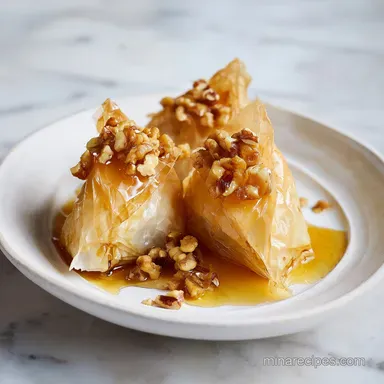
Greek Baklava Recipe: Authentic and Crispy

- Time: 60 min active + 75 min baking = Total 135 mins
- Flavor/Texture Hook: Shatter crisp pastry with a velvety honey finish
- Perfect for: Holiday centerpieces or impressive dinner party finales
I remember the first time I tried making this at home. I treated the phyllo dough like regular pastry, and it was a disaster. The sheets were like tissue paper in a windstorm, fluttering all over my kitchen, and because I didn't clarify my butter, the milk solids burnt and left bitter black specks on the bottom of the pan.
It was a mess, but it taught me that this dessert isn't about precision, it's about managing moisture and fat.
Forget the myth that you need a professional bakery or a degree in pastry arts to get those shatter crisp layers. Most people think the secret is in the dough, but it's actually in the syrup temperature. If you pour hot syrup on hot baklava, you get a soggy sponge.
If you pour cold syrup on hot baklava, you get that signature crunch.
We're going for a rustic, flavor first result here. You don't need the diamonds to be mathematically identical, and a few cracked sheets of dough won't ruin the taste. This greek baklava recipe is all about the contrast between the mahogany gold top and the honey soaked interior.
The Ultimate Greek Baklava Recipe
To get this right, we have to focus on the "architecture" of the dish. We're building a stack of fats and sugars that need to withstand the oven without collapsing. It's less like baking a cake and more like building a savory mille feuille, just with a lot more honey.
The goal is a specific color balance. We want a deep mahogany gold on the top layers, a rich cinnamon brown in the nut center, and a pop of emerald green from a pistachio garnish added right before serving. This contrast makes the dish look intentional even if your cuts are a bit crooked.
Why the Texture Works
- The Cold Syrup Shock: Pouring cooled syrup over a scorching pan creates a vacuum effect, pulling the liquid into the layers without steaming the pastry into mush.
- Clarified Fat Barrier: By removing water and milk solids from the butter, we create a pure fat barrier that fries the phyllo sheets as they bake.
- Nut Oil Activation: Toasting the walnuts slightly within the layers releases natural oils, which prevents the filling from tasting dry or "dusty".
- Acid Balance: The lemon juice in the syrup breaks down the heavy sugar chains, preventing the final result from crystallizing or feeling sticky on the teeth.
| Method | Time | Texture | Best For |
|---|---|---|---|
| Stovetop Syrup | 20 mins | Viscous/Syrupy | Creating the soak |
| Oven Bake | 75 mins | Shatter crisp | Structuring the layers |
This contrast between the slow simmered syrup and the over high heat bake is what defines the dish. If you rush the syrup or underbake the pastry, the whole thing loses its structural integrity.
Quick Specs and Timing
Before you start, make sure your butter is fully clarified. I usually do this a day early so it has time to settle. If you're in a rush, just melt it slowly and skim the white foam off the top. Trust me, the extra five minutes of skimming saves you from a burnt tasting base.
| Ingredient | Science Role | Pro Secret |
|---|---|---|
| Phyllo Dough | Structural Lattice | Keep covered with a damp towel |
| Clarified Butter | Heat Conductor | Use a brush, don't pour it |
| Honey | Humectant/Sweetener | Use a high-quality wildflower variety |
| Walnuts | Texture/Fat Base | Chop unevenly for better "grip" |
Tools for the Job
You'll need a 9x13 inch baking pan. I prefer a metal pan over glass because metal conducts heat faster, giving you a better sear on the bottom layers. A wide pastry brush is also non negotiable; trying to spread butter with a spoon will just rip your phyllo sheets to shreds.
For the syrup, a small stainless steel saucepan is best. You want something that allows you to see the bubbles clearly so you know exactly when it hits that simmering point. A sharp chef's knife is essential for the final cuts, as a dull blade will crush the layers rather than slicing through them.
The Assembly and Bake

Phase 1: The Advance Syrup Prep
Start by simmering the 340g honey, 200g granulated sugar, 240ml water, and 1 cinnamon stick in your saucepan. Once it reaches a boil, reduce the heat and let it simmer for 10 minutes. Stir in 15ml fresh lemon juice and remove it from the heat. Let this cool completely. According to the USDA FoodData, the sugar and honey combination creates a dense syrup that preserves the pastry's moisture while adding a deep, floral sweetness.
Phase 2: Assembling the Architecture
Preheat your oven to 325°F (165°C). Brush the bottom of your pan with melted clarified butter. Layer 8 to 10 sheets of phyllo, brushing each individual sheet with the 225g melted butter.
This is where people get lazy, but every single sheet needs its own coat of fat to ensure they separate and crisp up.
Spread half of your walnut mixture (300g walnuts, 60g sugar, 8g cinnamon, 1.5g salt) evenly across the dough. Repeat the phyllo layering with another 8-10 buttered sheets, and top with the remaining nuts. Finish with a final stack of 8-10 buttered phyllo sheets.
Phase 3: The Precision Cut and Bake
Using a sharp knife, cut the baklava into diamonds or squares before baking. If you wait until after it's baked, the top layers will shatter and break. Bake for 45-55 minutes until the top is a deep mahogany gold.
Immediately upon removing the pan from the oven, pour the cooled syrup evenly over the hot pastry. You should hear a loud sizzle. This is the "thermal shock" we talked about. Let it sit for at least 4 hours, or overnight, to let the syrup penetrate the bottom layers.
Fixing Common Baklava Blunders
Troubleshooting Common Issues
| Issue | Solution |
|---|---|
| Why Your Layers Stay Soggy | This usually happens if the syrup was too hot when poured or if the pastry wasn't baked long enough. If the interior is pale, the butter hasn't "fried" the dough, and the syrup just sits on top rather |
| Why the Top Burnt | If the top is getting too dark but the middle feels soft, your oven might be running hot. I've found that moving the rack down one notch helps. You can also loosely tent it with foil for the last 10 m |
| Why Syrup Pools at Bottom | This often means the nut layer was packed too tightly, creating a waterproof barrier. Next time, keep the walnut chop a bit coarser to allow the syrup to seep through the gaps. |
- ✓ Use clarified butter to avoid burnt milk solids.
- ✓ Keep phyllo covered with a damp cloth to prevent cracking.
- ✓ Cut the pastry before baking, never after.
- ✓ Allow 4-6 hours for the syrup to fully absorb.
- ✓ Use a metal pan for a crispier bottom.
Dietary Swaps and Options
If you're looking to change the flavor profile, the walnut base is very flexible. I've tried using pistachios for a more traditional Turkish style, or even a mix of pecans and walnuts for a deeper, more buttery flavor.
For those avoiding honey, a maple syrup reduction works, though it changes the floral notes to something more earthy.
| Original Ingredient | Substitute | Why It Works |
|---|---|---|
| Walnuts (300g) | Pistachios (300g) | Similar fat content. Note: Adds a brighter green color and nuttier taste |
| Honey (340g) | Maple Syrup (340g) | Similar viscosity. Note: Less floral, more woody flavor profile |
| Unsalted Butter | Coconut Oil (melted) | High fat content. Note: Adds a slight coconut hint; dairy-free |
For something completely different, if you're craving a treat that doesn't require an oven, my edible cookie dough recipe is a great way to satisfy a sweet tooth without the assembly time.
Storage and Zero Waste
Store your baklava at room temperature in an airtight container for up to 5 days. While some people put it in the fridge, I find that the honey can crystallize, and the pastry loses some of its shatter. If you must freeze it, wrap individual pieces in parchment paper and foil for up to 2 months.
Reheat in a 300°F oven for 5-10 minutes to bring back the crispness.
To avoid waste, don't throw away the leftover phyllo scraps. Brush them with butter, sprinkle with cinnamon sugar, and bake them for 5 minutes. They make incredible sweet chips that are great for snacking while you wait for the main batch to cool. This is similar to how I handle excess dough when making homemade bread bowls, turning scraps into croutons.
Perfect Pairings and Serving
Since this greek baklava recipe is very rich, you need something to cut through the sweetness. A strong, unsweetened Greek coffee or a dark roast espresso is the classic choice. The bitterness of the coffee balances the honey perfectly.
For a garnish, I highly recommend a sprinkle of crushed pistachios and a few dried rose petals. This adds those emerald and crimson accents that make the mahogany gold pastry pop. If you're serving this at a party, a dollop of thick Greek yogurt or a drizzle of heavy cream on the side provides a tangy contrast that refreshes the palate between bites.
One last tip: Don't be afraid of the "imperfections." A rustic, slightly uneven piece of baklava often has the best mix of syrup soaked bottom and crispy top. Just keep the temperature in check and the butter clarified, and you're good to go. Right then, let's crack on and get baking!
Recipe FAQs
What is the Greek version of baklava?
A honey-soaked pastry layered with walnuts. It features a distinct balance of cinnamon and lemon-infused honey syrup poured over crisp, buttery phyllo sheets.
What makes Greek baklava different?
The heavy reliance on honey and walnuts. While other versions use pistachios or rosewater, this style prioritizes an earthy, aromatic profile. If you loved the sweet-tart balance from the lemon juice here, see how we use the same acid technique in our no bake cheesecake to brighten the flavor.
Is it true that baklava must be stored in the refrigerator to stay fresh?
No, this is a common misconception. Room temperature is best for up to 5 days; refrigeration often causes the honey to crystallize and the pastry to lose its shatter.
What is the original filling for baklava?
Finely chopped walnuts. These are combined with cinnamon and sugar to provide a rich, nutty contrast to the sweetness of the honey syrup.
Why did my baklava turn out soggy?
The syrup was likely too hot or the pastry was underbaked. For a crisp result, always pour completely cooled syrup over the hot pastry immediately after it leaves the oven.
How to store baklava for maximum crispness?
Keep it at room temperature in an airtight container. If you need to freeze it, wrap individual pieces in parchment and foil for up to 2 months, then reheat at 300°F for 5-10 minutes.
How to stop the top from burning while the middle stays soft?
Move the oven rack down one notch. You can also loosely tent the pan with foil during the last 10 minutes of baking to protect the mahogany-gold crust.
Greek Baklava Recipe with Walnuts