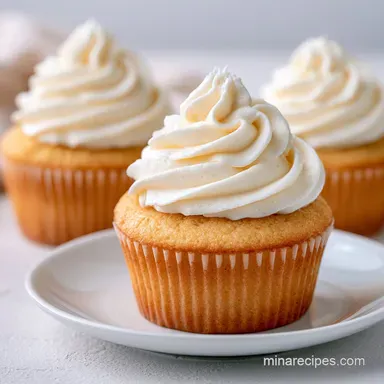
Vanilla Cupcake Recipe: Velvety and Buttery
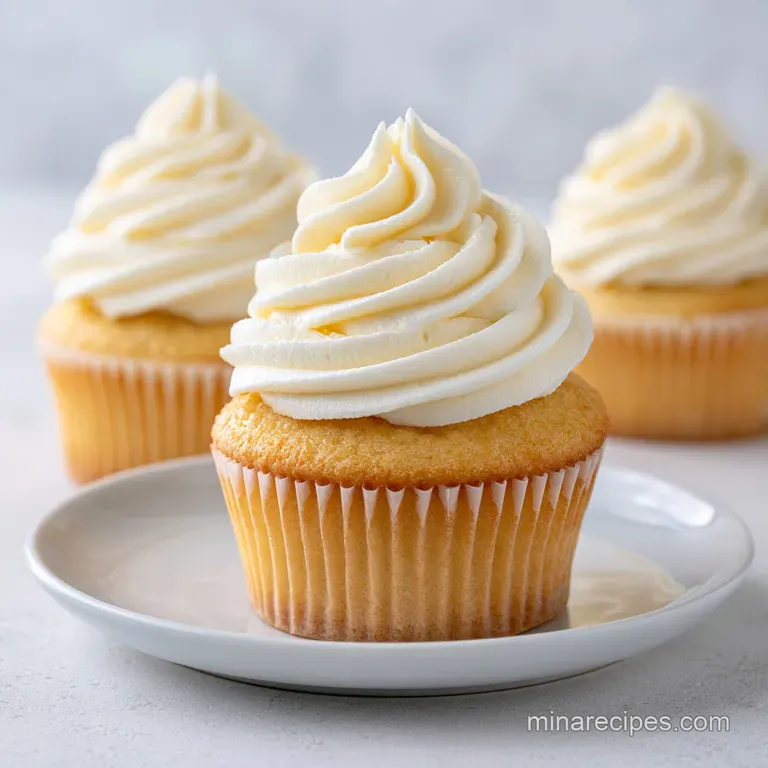
- Time:15 minutes active + 20 minutes baking = Total 35 minutes
- Flavor/Texture Hook: Velvety, buttery crumb with a silky frosting
- Perfect for: Birthday parties, bake sales, or a weekend treat
- The Best Vanilla Cupcake Recipe
- Why This Batter Stays Light
- Component Analysis
- Ingredients and Substitutes
- Essential Baking Tools
- Key Steps for Success
- How to Fix Common Problems
- Troubleshooting Common Issues
- Adjusting Your Batch Size
- Debunking Kitchen Myths
- Storage and Zero Waste
- What to Serve This With
- Recipe FAQs
- 📝 Recipe Card
That smell. You know the one, where the warm, sugary scent of vanilla starts drifting from the oven and suddenly the whole house feels like a hug. I remember the first time I tried making these from scratch for a friend's baby shower.
I was so nervous that I rushed everything, throwing cold eggs and chilled milk straight into the batter. The result? A curdled, grainy mess that looked more like cottage cheese than cake batter.
I spent the next few weekends messing around with the temperature of my ingredients, and that's when I realized the secret isn't some fancy tool, but just patience. Once I stopped rushing the process and let my butter cool and my eggs warm up, the batter transformed into this glossy, smooth ribbon.
It's a simple lesson, but it's the difference between a cake that's a bit dense and one that actually melts in your mouth.
If you've been looking for a vanilla cupcake recipe that doesn't require a degree in pastry arts, you're in the right place. We're going for a rustic, comforting vibe here. I don't care if your frosting swirls aren't perfectly symmetrical, as long as the taste is spot on. Let's get into it.
The Best Vanilla Cupcake Recipe
Right then, let's talk about what's actually happening in your mixing bowl. Most people think vanilla cake is just "plain," but getting that specific, bakery style fluffiness takes a little bit of intent. I've found that the balance of melted butter and whole milk creates a moisture level that lasts for days.
I once tried a version with only oil, and while it was moist, it lacked that rich, comforting depth that only butter provides. By melting the butter but letting it cool, we get the best of both worlds: the ease of mixing and the flavor of a classic butter cake.
It's an uncomplicated approach that focuses on the flavor first.
But what about the texture? We want a crumb that's tight but tender. That comes down to how we handle the flour. If you beat the batter like you're trying to win a race, you'll develop too much gluten, and your cupcakes will be tough. The trick is the fold.
A gentle spatula movement keeps the air in and the toughness out.
Why This Batter Stays Light
Instead of getting into a textbook, let's just look at why these specific moves matter for your bake.
- Room Temp Synergy: Warm eggs and milk bond with fats more easily, creating a smooth emulsion that doesn't separate.
- The Gentle Fold: Stirring only until the flour disappears prevents the cake from becoming bread like or rubbery.
- Melted Butter Logic: Using melted butter instead of creamed butter creates a softer, more velvety crumb.
- Leavening Balance: The baking powder reacts with the heat to lift the batter quickly before the structure sets.
| Method | Time | Texture | Best For |
|---|---|---|---|
| Fast (Oil) | 10 mins | Spongy | Quick weeknight snacks |
| Classic (Butter) | 15 mins | Velvety | Occasions and celebrations |
Component Analysis
I've spent a lot of time wondering why some cakes taste "flat" while others taste like a dream. It usually comes down to the quality of a few key components. For example, using a cheap vanilla essence instead of pure extract is a mistake I made early on. The extract has a depth that essence just can't touch.
If you're into other treats, you might notice that the same logic applies to things like my moist chocolate cupcakes, where the quality of the cocoa does the heavy lifting. In this recipe, the vanilla and the butter are the stars.
| Ingredient | Science Role | Pro Secret |
|---|---|---|
| All Purpose Flour | Provides structure | Spoon and level for no packing |
| Pure Vanilla Extract | Primary flavor profile | Add a tiny bit extra to the frosting |
| Whole Milk | Hydration and tenderness | Must be room temp to avoid curdling |
| Baking Powder | Lift and aeration | Check the expiry date for a good rise |
Ingredients and Substitutes
For the batter, you'll need: - 2 cups all purpose flour Why this? Balanced protein for a sturdy but soft cake - 1 cup granulated sugar Why this? Dissolves quickly for a smooth texture - 1 1/2 tsp baking powder - 1/2 tsp salt - 1/2 cup unsalted butter,
Melted and cooled Why this? Adds richness without the fuss of creaming - 2 large eggs, room temperature - 3/4 cup whole milk, room temperature - 1 tbsp pure vanilla extract
For the vanilla buttercream: - 1 cup unsalted butter, softened - 3 cups powdered sugar - 2 tbsp heavy cream - 1 tsp pure vanilla extract - 1 pinch salt
| Original Ingredient | Substitute | Why It Works |
|---|---|---|
| Whole Milk (3/4 cup) | Almond Milk (unsweetened) | Similar liquid ratio. Note: Slightly thinner crumb |
| Unsalted Butter | Salted Butter | Works fine. Note: Reduce the added salt by a pinch |
| All Purpose Flour | Cake Flour | Lower protein. Note: Makes it even softer but more fragile |
| Heavy Cream (2 tbsp) | Whole Milk | Adds moisture. Note: Frosting will be slightly less stable |
Essential Baking Tools
You don't need a professional kitchen to pull this off. I mostly use a basic set of bowls and a whisk. If you have a stand mixer such as a KitchenAid, it's great for the buttercream, but a hand mixer works just as well.
The most important thing is the muffin pan. I prefer a standard 12 cup pan. Make sure your liners are snug; if they're too loose, the batter can leak under the edge and create those "mushroom tops" that are hard to frost. A simple wire rack is also a must.
If you leave the cupcakes in the pan too long, the bottoms can get soggy from the steam.
Key Steps for Success
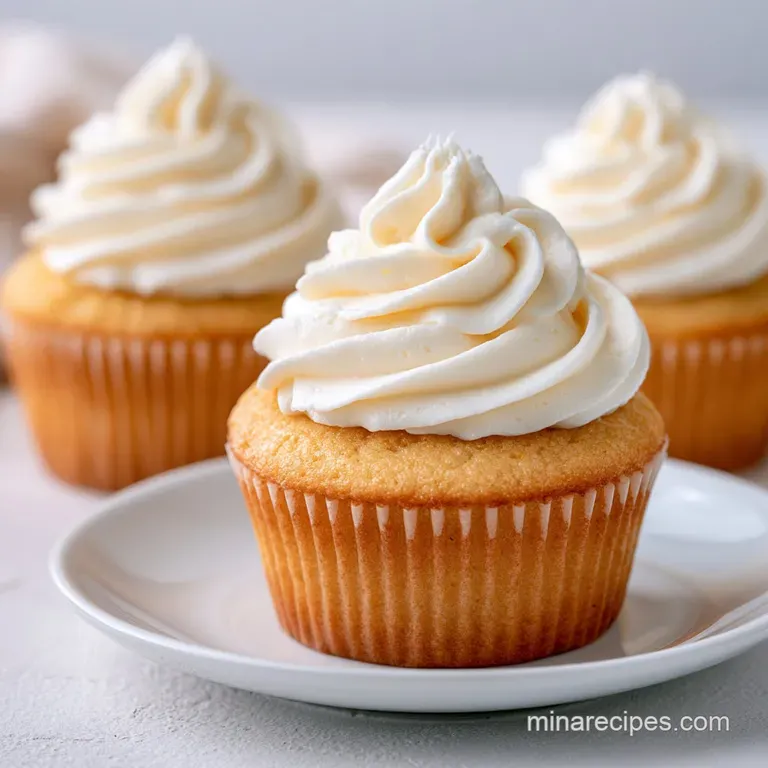
Let's crack on with the actual baking. Trust me on this: don't overthink it. Just follow the cues.
- Preheat your oven to 350°F (175°C) and line a standard 12 cup muffin pan with paper liners.
- In a large bowl, whisk together the all purpose flour, granulated sugar, baking powder, and salt until no large clumps remain.
- In a separate bowl, whisk together the melted butter, eggs, milk, and vanilla extract until the mixture is a uniform pale yellow.
- Pour the wet ingredients into the dry ingredients and fold gently with a spatula until just combined. Note: Stop as soon as the last streak of flour disappears.
- Divide the batter evenly among the liners, filling each about 2/3 full.
- Bake for 18–22 minutes until a toothpick inserted in the center comes out clean.
- Cool cupcakes in the pan for 5 minutes, then transfer to a wire rack.
- For the buttercream, beat softened butter until creamy, then gradually add powdered sugar, heavy cream, vanilla, and salt.
- Whip the frosting on high for 2 minutes until it looks velvety and light.
- Frost the cooled cupcakes with a knife or piping bag.
Chef's Note: If you want a super smooth top for frosting, use a vegetable peeler to gently shave off the rounded dome of the cupcake once they've cooled. It gives you a flat surface that holds the frosting better.
How to Fix Common Problems
Even when you follow a vanilla cupcake recipe, things can go sideways. It's usually nothing catastrophic, just a little tweak needed for next time. I've had my fair share of "cake disasters," and most of them were just due to rushing.
Troubleshooting Common Issues
| Issue | Solution |
|---|---|
| Why Your Cupcakes Sink | If the center of your cake drops after coming out of the oven, it's usually because the oven door was opened too early. This lets out the heat and causes the air bubbles to collapse before the flour s |
| Why Your Batter Curdled | This happens when your milk or eggs are too cold. The cold liquid causes the melted butter to seize up into little clumps. It'll still bake, but the texture won't be as silky. |
| Why They Over Browned | If the edges are dark but the center is raw, your oven might be running hot. I always recommend using an oven thermometer because most built in dials are lying to you. |
Common Mistakes Checklist
- ✓ Checked that eggs and milk are actually room temperature
- ✓ Measured flour by spooning it into the cup, not scooping
- ✓ Stopped mixing the moment the batter became uniform
- ✓ Let the cupcakes cool completely before adding frosting
- ✓ Used pure vanilla extract instead of imitation flavoring
Adjusting Your Batch Size
Sometimes you only need a few cupcakes, and other times you're feeding a whole office. This vanilla cupcake recipe is easy to scale, but you can't just multiply everything blindly.
Scaling Down (Half Batch): When making 8 cupcakes, you'll need to handle the eggs carefully. Beat one egg in a small bowl and use half of it by weight or volume. Use a smaller pan or leave gaps between the liners in a large pan to ensure the heat circulates evenly.
Reduce your bake time by about 20%, starting your check at 14 minutes.
Scaling Up (Double or Triple Batch): If you're making 32 or more, work in batches. Don't try to mix a massive amount of batter in one bowl, or you'll end up overmixing the bottom layer while trying to incorporate the top.
For the frosting, increase the butter and sugar linearly, but only increase the salt and vanilla to about 1.5x. Too much extract in a giant batch can make the frosting taste slightly medicinal.
| Goal | Adjustment | Outcome |
|---|---|---|
| Smaller Batch | 1/2 Egg (beaten) | Maintains moisture balance |
| Larger Batch | Work in 2 batches | Prevents overmixing |
| Extra Height | Fill liners 3/4 full | Higher dome, longer bake time |
Debunking Kitchen Myths
There's a lot of noise out there about baking. Let's clear up a few things that don't actually matter as much as people claim.
First, the idea that you must sift your flour. While sifting is great for cakes like angel food, for a vanilla cupcake recipe, a good whisking of the dry ingredients is plenty. As long as you don't have huge clumps of baking powder, your cake will rise just fine.
Second, the myth that "room temperature" means "warm." Your eggs shouldn't be warm to the touch; they just shouldn't be cold from the fridge. If you forgot to take them out, just pop them in a bowl of warm water for 5 minutes. It's a lifesaver.
Finally,, some people say you can't use melted butter for a "real" cupcake. Honestly, don't even bother with the creamed method if you want a more moist, home style texture. Melted butter gives a denser, more velvety feel that I personally prefer over the airy, almost hollow feel of creamed cakes.
Storage and Zero Waste
Once you've finished your vanilla cupcake recipe, you'll likely have a few left over. These stay fresh in an airtight container at room temperature for about 2 days. If you're keeping them in the fridge, they'll last 5 days, but the butter in the cake will firm up.
To fix this, just let them sit out for 30 minutes or pop them in the microwave for 5-10 seconds before eating.
For freezing, I recommend freezing the cupcakes without the frosting. Wrap them tightly in plastic wrap and place them in a freezer bag. They'll stay great for 2 months. Just thaw them on the counter and frost them fresh.
Zero Waste Tips:
- Leftover Buttercream: If you have extra frosting, freeze it in small dollops on a parchment lined tray. Once frozen, toss them into a bag. You can thaw a single dollop for a quick treat later.
- Cake Scraps: If you leveled your cupcakes with a peeler, don't toss the tops! Crumble them into a bowl with a bit of extra frosting to make "cake pops" or use them as a topping for a parfait.
- Milk Surplus: If you have a tiny bit of room temp milk left, add it to your morning coffee or use it to make a quick pan of scrambled eggs.
What to Serve This With
Since these are quite sweet and rich, they pair well with something that cuts through the sugar. A strong, bitter espresso or a bold black tea is the gold standard here. The bitterness of the coffee balances the velvety sweetness of the buttercream.
If you're hosting a party, I like to serve these alongside a bowl of fresh raspberries or sliced strawberries. The acidity of the berries wakes up the vanilla notes. For those who want something a bit more adventurous, you could try serving them with a side of salted caramel sauce for dipping.
If you're looking for other treats to round out a dessert table, you could try making some soft chewy M&M cookies or maybe some white chocolate biscoff cookies for a bit of variety. The contrast between the soft cupcakes and the crunch of the cookies is always a hit with guests.
Right then, you've got everything you need. This vanilla cupcake recipe is all about keeping things uncomplicated and focusing on the flavor. Don't stress about the "perfect" look the taste is where the magic happens.
Just remember to keep your ingredients at room temperature, fold gently, and enjoy the process. Happy baking!
Recipe FAQs
Can I use cold milk and eggs instead of room temperature?
No, use room temperature. Cold liquids cause the melted butter to seize, which results in a curdled batter and a less silky texture.
Why did my cupcakes sink in the center after baking?
You likely opened the oven door too early. This releases heat and causes the air bubbles to collapse before the flour has set.
How to prevent the batter from becoming tough?
Fold wet ingredients into dry ingredients gently with a spatula. Stop as soon as they are just combined to avoid overmixing; if you enjoyed mastering this texture, see how the same principle works in our silky pudding.
How to tell when the cupcakes are fully baked?
Insert a toothpick into the center. They are done when the toothpick comes out clean, which typically happens between 18 22 minutes.
Is it true that I should freeze cupcakes with the frosting on?
No, this is a common misconception. It is better to freeze them without frosting, wrapped tightly in plastic, to maintain the best quality for up to 2 months.
How to store cupcakes to keep them fresh?
Place them in an airtight container. They stay fresh for 2 days at room temperature or up to 5 days in the fridge.
Can I bake these at a higher temperature to save time?
No, stick to 350°F (175°C). Higher temperatures can cause the edges to brown too quickly while leaving the centers raw.
Vanilla Cupcake Recipe