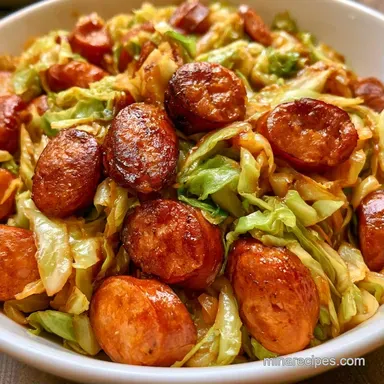
Southern Fried Cabbage Sausage with Bacon
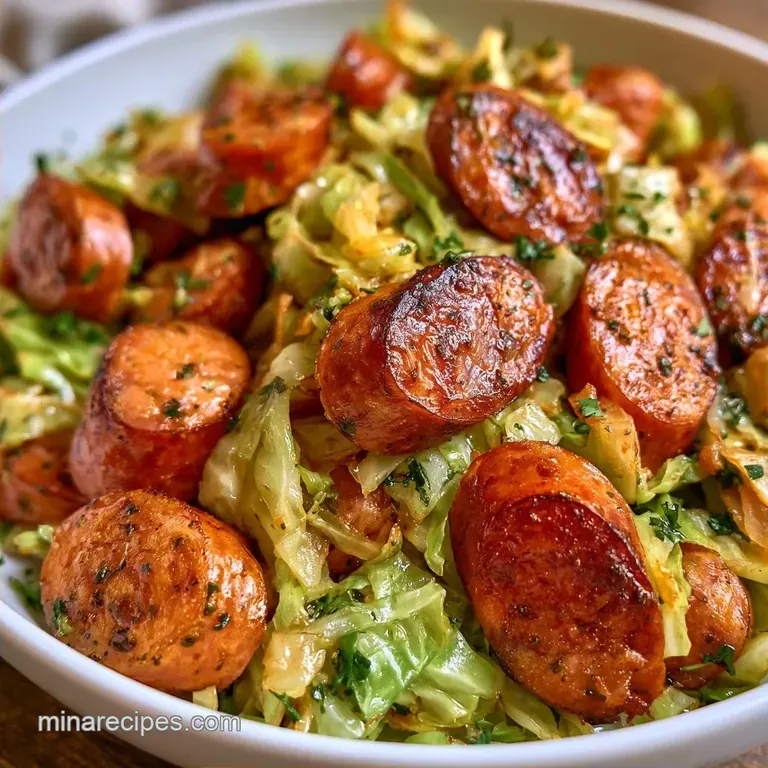
- Active: 10 min / Cook: 20 min
- Flavor/Texture Hook: Browned cabbage edges and snappy smoked sausage
- Perfect for: A cozy weeknight dinner
The loud, aggressive snap of thick cut bacon hitting a hot skillet is the only wake-up call I need on a Saturday. There is something about the scent of rendering pork fat and sliced onions that makes a house feel truly welcoming.
I used to think I could make this "lighter" by steaming the cabbage first, but that turned out to be a mistake. I ended up with a grey, mushy heap of greens that tasted like wet cardboard.
The real magic happens when you let the pan do the work. You want a deep, mahogany crust on the sausage and those slightly charred, sweet edges on the cabbage. When the heat is dialed in, the vegetable transforms from something dull into the star of the meal.
This Fried Cabbage Sausage recipe is fast, but it carries the depth of a slow cooked dish because of the way the flavors stack. It’s one of those recipes where you build the taste layer by layer, and by the time the vinegar hits the pan at the end, the aroma fills the entire kitchen.
Why This Recipe Works
- Meat Fat Base: Frying the cabbage in rendered bacon and sausage fat creates a flavor bridge. The vegetables absorb the smoky essence instead of just sitting in neutral oil.
- The Sear: Letting the cabbage sit undisturbed for a few minutes creates charred edges. This adds a nutty, sweet contrast to the salty meat.
- Acid Balance: A splash of apple cider vinegar at the end cuts through the heavy fats. It wakes up the whole dish and keeps it from feeling too greasy.
The key is temperature control. High heat browns the meat and cabbage, while medium heat softens the onions and peppers without burning the garlic.
DIVTABLE_0
Recipe Specs and Details
Precise timing is key to keeping the cabbage from becoming mushy. While I keep the heat high, I make sure the garlic doesn't burn to prevent a bitter flavor.
Opt for a wide skillet for the best outcome. Using a narrow pan causes the cabbage to crowd and steam instead of frying. A 12 inch cast iron skillet is an excellent choice.
What Each Ingredient Does
| Component | Purpose | Substitute Notes |
|---|---|---|
| Smoked Sausage | Main protein and smoky base | Kielbasa works well; slightly milder flavor |
| Green Cabbage | Bulk and sweetness | Savoy cabbage; more wrinkled leaves, softer taste |
| Apple Cider Vinegar | Brightness and acidity | White wine vinegar; sharper, less fruity |
| Smoked Paprika | Earthy depth | Sweet paprika; less smoky, more colorful |
Essential Kitchen Tools
You don't need much for this, but the right pan makes a difference. A heavy bottomed skillet, like a Lodge cast iron, distributes heat evenly so you don't get hot spots that burn the sausage.
A sharp chef's knife is also a must. Chopping two pounds of cabbage can be a chore if your blade is dull. I prefer a wide blade knife to get through the core quickly.
Bringing It Together
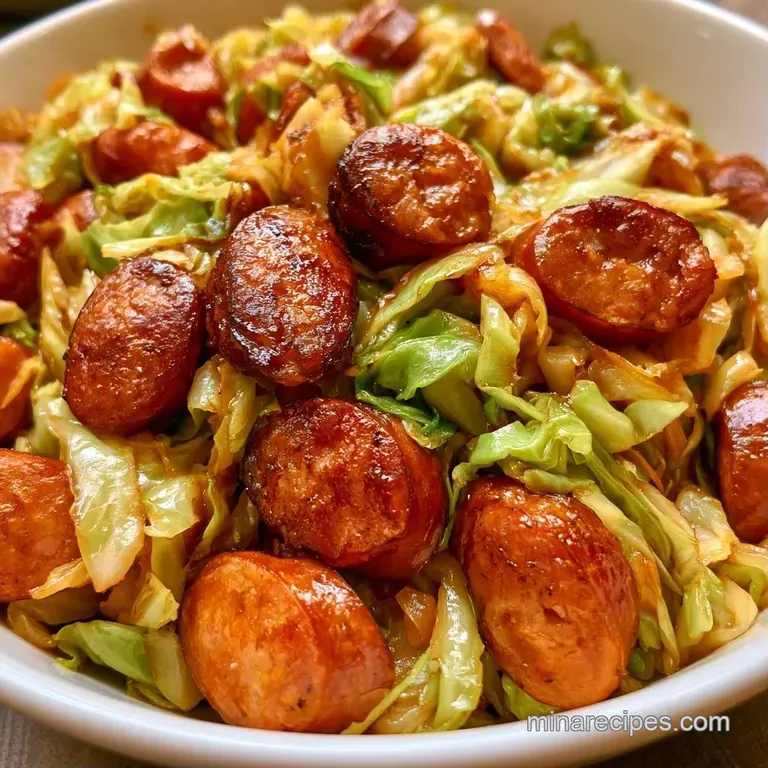
Phase 1: Rendering and Browning
Place the diced bacon in a cold skillet and turn the heat to medium. Fry until the bacon is crispy and the fat has fully rendered. Add the sliced smoked sausage to the skillet and sear for 3–5 minutes per side until they develop a deep mahogany colored crust.
Remove the meat and set aside, leaving the rendered fat in the pan.
Phase 2: The Aromatics
In the same skillet, sauté the sliced onion and green bell pepper for 4–6 minutes until onions are translucent and beginning to brown. Stir in the minced garlic and smoked paprika, cooking for 60 seconds until fragrant.
Phase 3: The Cabbage Caramelization
Increase heat to medium high and add the chopped cabbage. Spread evenly and press down, letting it cook undisturbed for 4–5 minutes until the edges are charred and brown.
Stir the cabbage and cook for another 8–10 minutes until the texture is but still has a slight bite.
Phase 4: The Final Integration
Return the browned bacon and sausage to the pan. Stir in the apple cider vinegar and crushed red pepper flakes. Season with salt and black pepper to taste. Stir everything for about 2 minutes until the meat is heated through.
Chef's Note: If you find the pan getting too dry after adding the cabbage, add a tablespoon of butter. It helps the cabbage brown more evenly without sticking.
What Can Go Wrong
Fixing Watery Cabbage
Cabbage has a high water content. If you crowd the pan or use low heat, the vegetable releases moisture and steams. This results in a pale, soft texture instead of the browned edges we want for Fried Cabbage Sausage. To avoid this, make sure your pan is screaming hot before the cabbage goes in.
Avoiding Burnt Garlic
Garlic burns much faster than onions or peppers. If you add it too early, it turns black and bitter. Always add your garlic in the last 60 seconds of the aromatic phase.
Managing Too Much Grease
Depending on the brand of sausage, you might end up with a pool of oil. While fat equals flavor, too much makes the dish feel heavy. If the pan looks like a deep fryer, spoon out a few tablespoons of fat before adding the cabbage.
| Problem | Root Cause | Solution |
|---|---|---|
| Cabbage is mushy | Overcooked or steamed | Reduce cook time; use higher heat |
| Bitter taste | Burnt garlic or paprika | Add spices later in the process |
| Bland flavor | Not enough salt or acid | Add an extra teaspoon of vinegar |
How to Serve and Enjoy
While this is a satisfying meal on its own, it pairs wonderfully with a few sides. I personally enjoy it with cornbread or buttery mashed potatoes. For a lighter option, a crisp side salad with lemon vinaigrette provides a refreshing balance to the richness.
A more classic presentation is serving the dish over white rice. The rice absorbs the smoky pan sauce, which is undoubtedly the best part of the meal. To incorporate more of this vegetable into your diet, my Vegetarian Cabbage Wraps recipe is another fantastic option.
For a bit of extra zing, finish the dish with a sprinkle of sliced green onions or a dollop of sour cream.
Storage and Zero Waste
Keep leftovers in an airtight glass container in the refrigerator for up to 4 days. The flavors actually settle and deepen overnight, making the leftovers taste just as good as the first batch.
For reheating, avoid the microwave if you can. The microwave makes the cabbage rubbery. Instead, toss the Fried Cabbage Sausage back into a skillet over medium heat for 5 minutes. Add a tiny splash of water or broth to loosen things up.
Don't throw away the cabbage core! I usually dice the tougher parts of the core and toss them into a stock pot. They add a great earthy base to homemade vegetable broth. If you have leftover sausage, it's a great addition to a breakfast scramble with eggs.
Mix It Up
To turn this into a hearty feast, toss in some diced gold potatoes. Sauté them in the bacon fat before you begin with the onions to transform this Fried Cabbage Sausage into a satisfying one-pot dinner for a large group.
For a punchier flavor profile, try substituting the smoked sausage with spicy Andouille, a staple in Cajun cuisine that adds significant heat. If you prefer a meatless version, smoked tofu and a splash of liquid smoke can mimic that savory depth, similar to the method used in my Vegetarian in 35 Minutes recipe.
- For a spicier kick
- Increase red pepper flakes to 1 tsp.
- For a heartier meal
- Add 2 cups of diced potatoes.
- For a tangier finish
- Increase apple cider vinegar to 2 tbsp.
Ingredient Substitutions
| Original Ingredient | Substitute | Why It Works |
|---|---|---|
| Smoked Sausage | Kielbasa | Similar texture, though slightly less smoky |
| Green Cabbage | Savoy Cabbage | Softer leaves, slightly nuttier taste |
| Apple Cider Vinegar | Lemon Juice | Provides necessary acidity with a citrus twist |
| Bacon | Smoked Paprika + Oil | Mimics smoke flavor for a meatless base |
Scaling the Recipe
When cooking for more people, avoid overcrowding your cookware. If you cram 4 pounds of cabbage into a single standard skillet, it will steam instead of frying. It is better to work in batches.
For a half batch, use 0.5 lb of sausage and 2 oz of bacon, reducing the cabbage to 1 lb. You can keep the spice measurements the same, but taste as you go.
If you are doubling the recipe for a party, only increase the salt and paprika by 1.5x initially. You can always stir in more at the end, but you cannot remove it.
Common Beliefs Debunked
Some believe that cabbage must be boiled first to ensure it is tender, but this is a mistake. Frying it in fat creates a far superior texture and prevents the vegetable from becoming watery.
Another myth is that vinegar should be added at the beginning. Doing so can actually prevent the cabbage from browning properly. Adding it at the finish preserves that bright, tangy zing.
Finally, while some claim you cannot use non-stick pans, you certainly can though you won't achieve the same deep caramelization as you would with stainless steel or cast iron. The "fond" (those brown bits) that cling to a cast iron pan is where the most intense flavor lives.
This Fried Cabbage Sausage is all about the technique. Be patient with the browning, don't rush the cabbage, and enjoy the aroma filling your kitchen. It's a simple, honest meal that always satisfies.
High in Sodium
1080 mg 1,080 mg of sodium per serving (47% 47% of daily value)
The American Heart Association recommends a daily limit of 2,300 mg of sodium to help manage blood pressure and reduce the risk of heart disease.
Tips to Reduce Sodium
-
Swap Smoked Sausage-25%
Replace the smoked sausage with a low-sodium or uncured version to significantly lower the primary source of salt.
-
Modify the Bacon-25%
Use low-sodium turkey bacon or reduce the amount of thick cut bacon to cut down on processed salt.
-
Omit Added Salt-25%
Since the bacon and sausage already provide significant salt, completely remove the 'salt to taste' from the recipe.
-
Increase Acidity-10%
Add an extra splash of apple cider vinegar or a squeeze of fresh lemon juice to enhance flavors without needing salt.
-
Add Fresh Herbs
Incorporate fresh parsley or thyme at the end of cooking to add complexity and aroma with zero added sodium.
Recipe FAQs
What is the secret to the best fried cabbage?
Let the cabbage cook undisturbed on medium high heat for 4-5 minutes. This creates the charred, caramelized edges that define the dish.
Which mistakes should I avoid when making fried cabbage?
Avoid stirring the cabbage too frequently. Moving it too much prevents the edges from caramelizing and results in a steamed texture.
What sausage is best for fried cabbage?
Use a sliced smoked sausage. If you enjoy these bold, smoky flavors, you might also like the balance in our honey garlic chicken.
How to make old fashioned southern fried cabbage with sausage?
Fry diced bacon in a cold skillet before searing smoked sausage. Sauté the onions and bell pepper in the rendered fat and finish with apple cider vinegar.
Can I add shrimp to this cabbage and sausage dish?
This version sticks to smoked sausage and bacon for a classic taste. These meats provide the savory foundation that pairs best with the cabbage.
Does adding bacon make the dish too salty?
Actually, no. The acidity from the apple cider vinegar balances the saltiness of the meats perfectly.
Is it true that cabbage must be boiled first?
Surprisingly, no. Sautéing the raw cabbage in rendered fat creates a better texture and a more intense flavor.
Fried Cabbage Sausage